
Articles
Estate Planning for Blended Families: How to Protect Everyone You Love
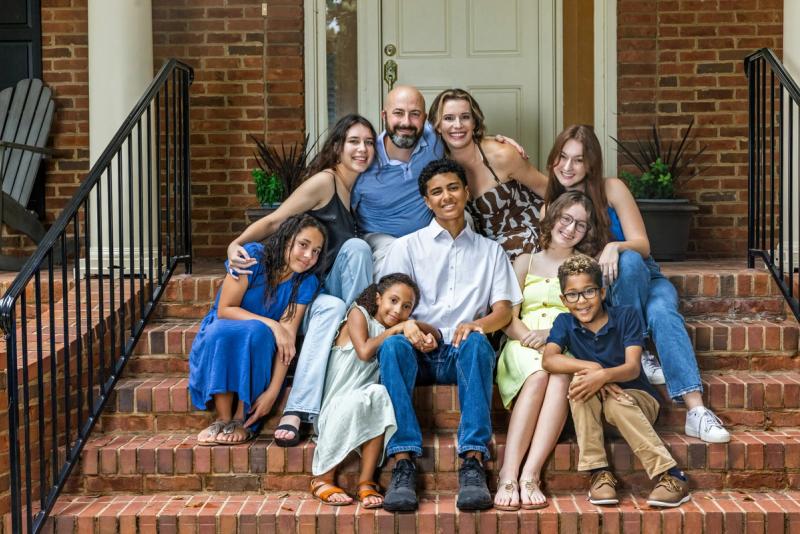
Blended families often feel straightforward in daily life. You love your spouse, you love your children, and your household works. On paper, however, things are more complicated.
When someone dies, the law has to determine what happens to assets, homes, and inheritances. In a blended family, those decisions affect both a surviving spouse and children from prior relationships. Without deliberate planning, the legal default in Missouri can produce results that no one in the family actually intended.
Fortunately, these challenges are manageable. With the right structure in place, an estate plan can provide financial security for a spouse while preserving what you want your children to inherit.
Why a Simple Will Often Isn’t Enough
Many couples rely on a simple will that leaves everything to the surviving spouse. The instinct behind this approach is understandable. Most people want to ensure that their spouse is financially secure if they die first.
The difficulty is what happens afterward. When assets pass outright to a surviving spouse, that spouse gains complete control over them. Over time those assets may be spent, redirected to a new spouse or family, or simply distributed according to whatever plan the surviving spouse has in place when they eventually pass away. None of this requires bad intent. It often happens through ordinary life circumstances.
A simple will also does not account for timing issues. If spouses die close together, or if the surviving spouse lives many years longer than expected, assets can move through the estate in ways that neither spouse anticipated. For blended families, relying on these default outcomes creates unnecessary risk.
The Real Source of Conflict
Most disputes that arise in blended families after a death are not driven by greed. They usually stem from uncertainty.
A stepchild who expected to inherit something but receives nothing may feel overlooked or betrayed. A surviving spouse who suddenly faces pressure from stepchildren may feel attacked or financially vulnerable. These situations often arise because expectations were never clearly addressed in advance.
A well-structured estate plan removes that ambiguity. When the plan clearly explains what happens to assets and when, families are far less likely to experience conflict during an already difficult time.
The Core Planning Challenge
Blended family planning almost always involves balancing two legitimate priorities: providing for the surviving spouse and preserving an inheritance for children.
Different couples resolve this balance in different ways. Some want certain assets to pass directly to their children at the first death. Others want the surviving spouse fully supported first, with children inheriting after the second death. Many families choose a hybrid approach where some assets go immediately to children while others remain available to support the spouse.
There is no single correct answer. The important thing is that the estate plan reflects the couple’s actual intentions rather than relying on default legal rules that may favor one group unintentionally.
Planning Tools That Help Balance These Interests
Blended family estate plans often use a combination of tools to provide clarity and protection.
Separate trusts are frequently used for assets each spouse brought into the marriage or inherited individually, alongside a joint trust for assets the couple built together. This approach keeps ownership clear and ensures that each spouse’s children have a protected path to the assets their parent intended for them.
Marital or QTIP trusts are another common solution. A Qualified Terminable Interest Property (QTIP) trust allows the surviving spouse to receive income and support during their lifetime while ensuring that the remaining assets pass to the beneficiaries chosen by the deceased spouse, typically their children. This structure allows a plan to support the spouse while preserving the ultimate inheritance for the next generation.
Finally, beneficiary designations on retirement accounts, life insurance, and similar assets must be coordinated carefully with the estate plan. Because these assets pass outside a will or trust, an outdated beneficiary form can unintentionally override the structure the plan was designed to create.
The Family Home Is Often the Most Difficult Asset
The family home is often the most emotionally and financially significant asset in a blended family estate plan. A surviving spouse typically needs housing security, while the deceased spouse’s children may expect the home to ultimately pass to them.
Simple co-ownership rarely solves this problem well. If children inherit a partial interest in a home while a surviving spouse continues to live there, both sides can end up feeling trapped. The children own an asset they cannot use, while the spouse may feel that their housing security depends on stepchildren.
A trust can resolve this situation more effectively. In many cases the surviving spouse is given the right to live in the home for life, or until they choose to move, while the property ultimately passes to the deceased spouse’s children. The trust can also specify responsibility for taxes, maintenance, and other expenses so that those issues do not become points of conflict later.
Every family’s situation is different, but careful planning around the home is often one of the most important parts of a blended family estate plan.
The Importance of Early Planning
Blended family estate planning works best when it happens before a crisis occurs. Once a death, illness, or family dispute is already underway, options become more limited and decisions are often influenced by stress or urgency.
Creating a plan while everyone is healthy and able to discuss their goals openly allows couples to design a structure that genuinely protects both their spouse and their children. Done well, the plan reduces uncertainty and helps preserve family relationships during one of life’s most difficult transitions.
Ready to Build a Plan That Protects Everyone?
Heritage Law Partners works with blended families throughout the St. Louis area from our offices in Chesterfield and Olivette. We help couples design estate plans that provide for a surviving spouse while preserving inheritances for children and reducing the risk of family conflict.
Schedule a consultation at heritagelawpartners.com or call (314) 325-9444.